
Start with your daily route
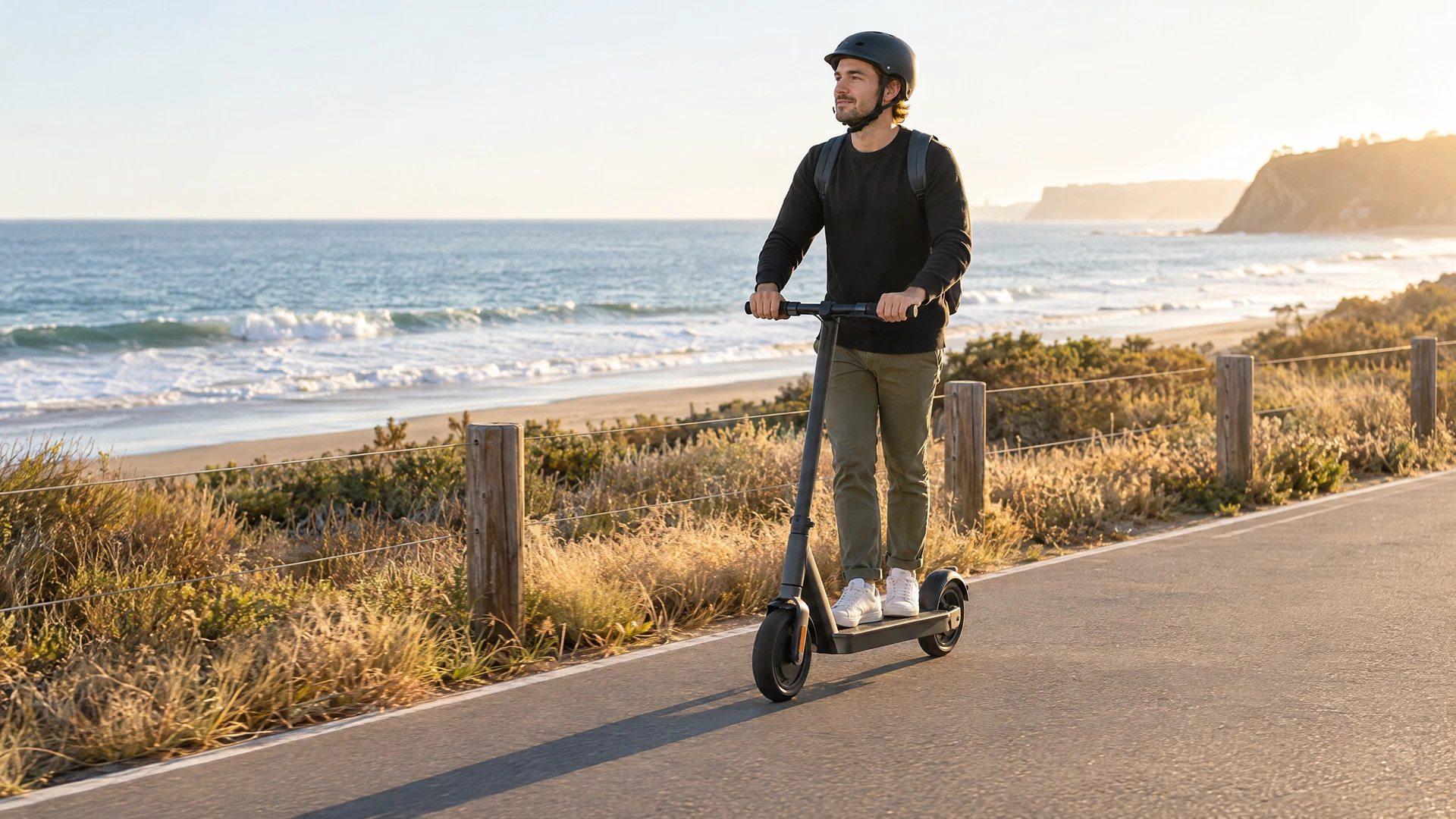
An e-bike can suit longer trips, grocery runs, and riders who want to pedal. A kick scooter can suit shorter city trips and compact storage. Neither is automatically the better choice: the best option is the one you can ride, store, and maintain comfortably.
Try the carrying test
A folding scooter or bike is not necessarily light. For example, NIU lists the KQi3 Pro at 44.75 lb including its battery, while Lectric lists the XP4 500W at 62 lb plus a 7 lb battery. If you have stairs, use the actual complete weight rather than the word “portable.”
Leave a range buffer
Advertised range is a controlled-condition figure. Speed, hills, rider load, wind, temperature, and tire pressure all affect distance. Plan for your round trip plus a reserve instead of buying a vehicle whose advertised maximum only just meets your route.
Check where you can ride
Vehicle classes, speed limits, helmet rules, age requirements, and access to cycle paths differ by location. Confirm local rules and your workplace or building battery policy before ordering.
Our starting point
Short paved trips and limited storage: start by exploring scooters. Longer commutes, cargo, or a desire to pedal: start with e-bikes. Then compare weight, brakes, service support, fit, and total cost—not just motor watts.
Research, not a road test
This guide is editorial advice based on manufacturer information and general buying considerations. No hands-on testing is claimed. Visit the linked model pages for sources and current specifications.